Access & consent
Access and consent, modelled as controls.
OAuth scopes, identity claims and legal terms are all controls. Each has a score and can require consent or an admin’s permission, so API access, data sharing and legal acceptance follow the same rules.
- API access with OAuth 2.0
- scope
- API access with OAuth 2.0
- personal data released into tokens
- claim
- personal data released into tokens
- terms and privacy policies
- legal
- terms and privacy policies
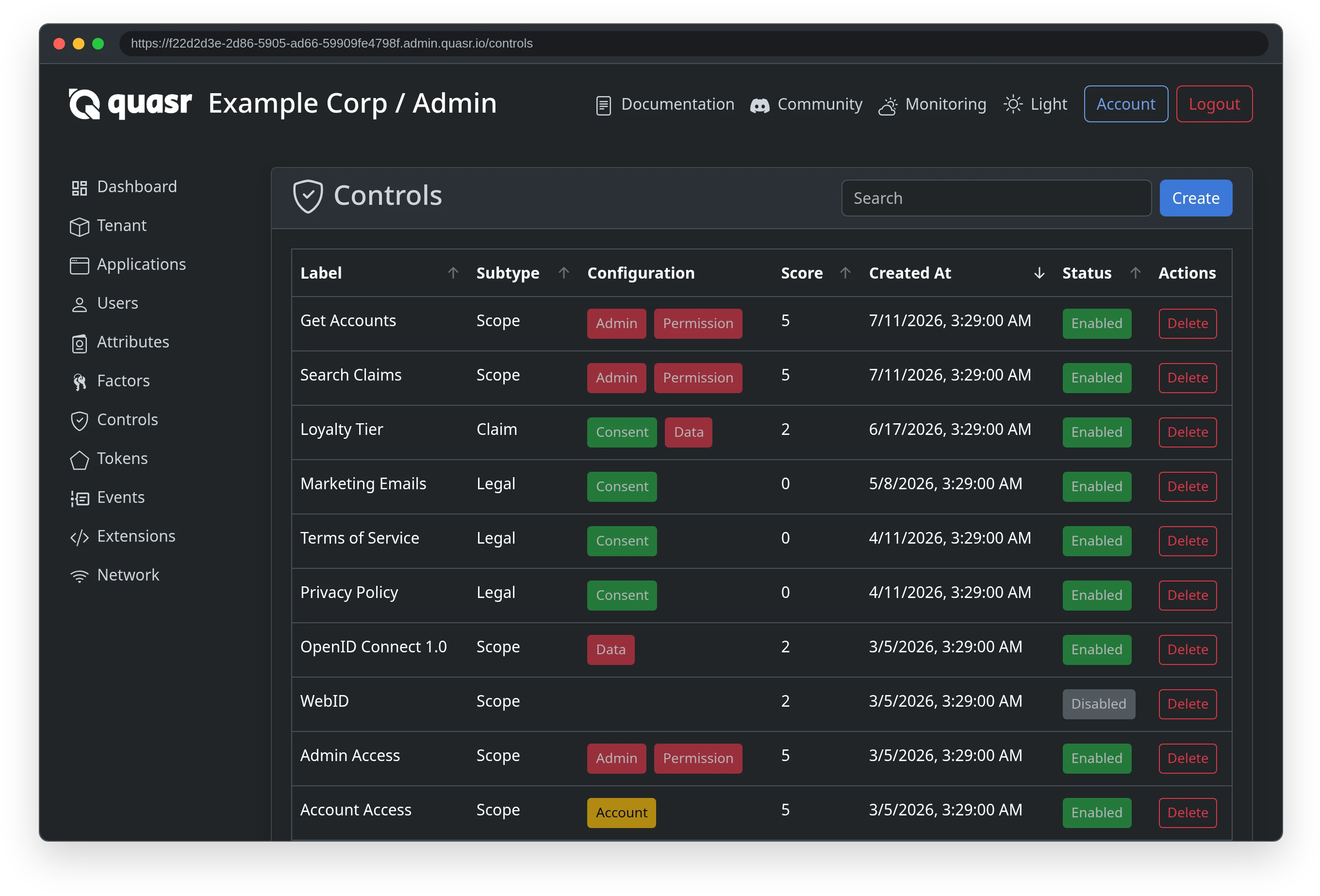
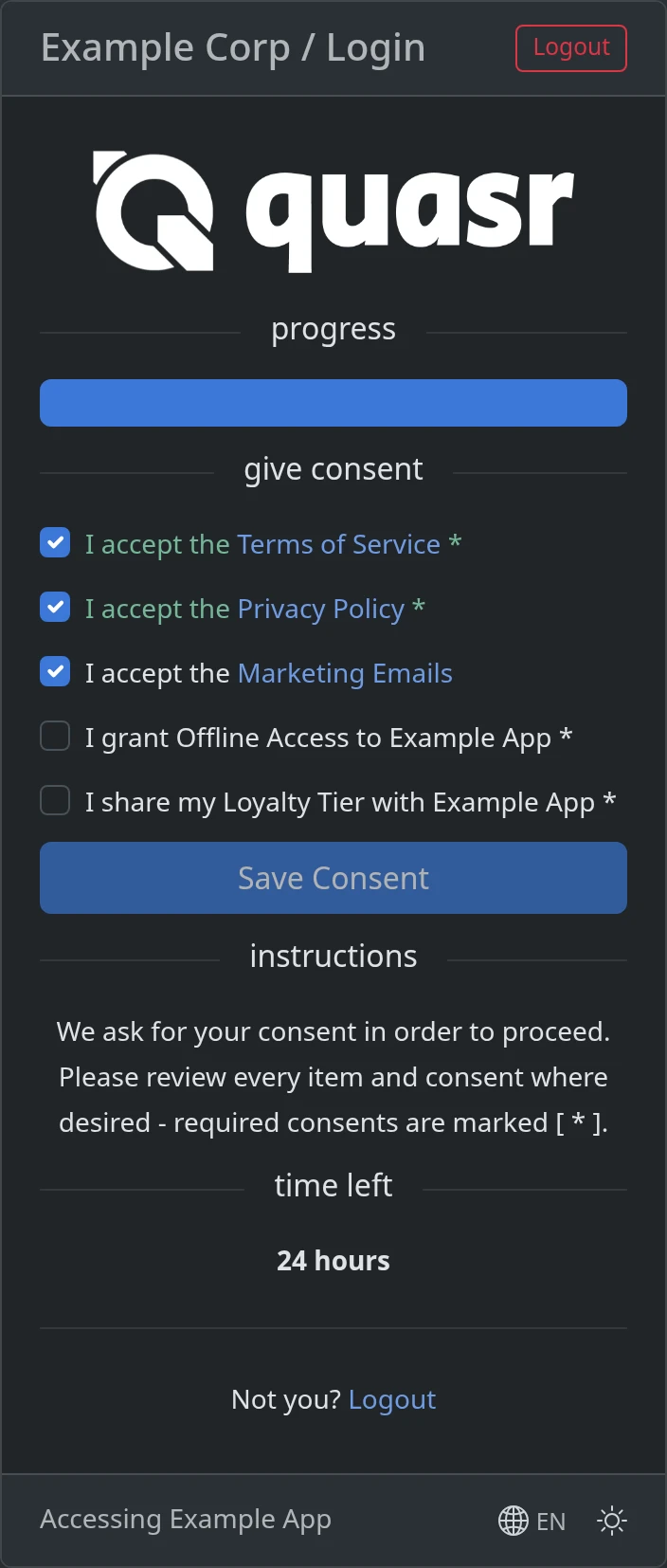
Scopes for API access
Model OAuth 2.0 scopes as controls, next to built-in ones such as openid, offline_access and admin access.
Claims for data sharing
Decide which attributes each app receives in its tokens, and ask users for consent before they’re released.
Legal terms
Terms and privacy policies, as a link or text, accepted at sign-up or login. Legal consent is kept per tenant and covers all your apps.
Scores enforce strength
Each control requires a minimum session score. Sensitive scopes ask for more factors, so users step up only when it matters.
Permissions
Require an admin’s permission for privileged controls, or make an application invite-only for the users you choose.
Users stay in control
Users see and revoke their consents in the Account UI. With your own login UI they can also time-limit consent, and tokens expire with it.
Specifications
- consent_default
- scopes off, claims on, legal always
- consent_kept
- per application (scopes, claims), per tenant (legal)
- rules
- controls required or optional per application
- internal_apps
- no consent prompts
- revocation
- by the user in the Account UI
Other building blocks
Ship login this afternoon.
Create a free account, configure your first tenant and connect your app with OpenID Connect.
No credit card required